For this re-designing life project me and my partner, Steven Little, chose the topic of designer babies. Designer babies is the process of changing certain traits of the fetus inside the mother's womb so when it is born it will permanently have that change. There are only certain things that you can change in your babies physical appearance before it's born.
This project was easy and especially interesting. We were also given a lot of freedom to do this project, giving us our own control to do this. Plus, it didn't take a lot of time to do this either.
We interviewed people on their opinion on designer babies and what they would do with it.
Wednesday, March 4, 2015

Period4
Desaun.S
Ori.y
Zane.C
Description:
Desaun.S
Ori.y
Zane.C
Description:
Cloning is something we all want to experiment with but can have dangerous impact. Without the correct knowledge scientist can spark something catastrophic that can affect others. One method of cloning is by taking fragments of the females DNA another way is producing an identical version called twinning. A good thing about cloning is the medical ways it can help us out. Cloning has a lot of debate with it some say cloning crops or livestock may help end world hunger others are hoping for more medical terms. Cloning humans has been outlawed in many countries. As we learn more about genetics maybe in the future cloning may be a big part of our lives. Cloning humans has been a huge talk for a while. many would find it inhumane others may expand science and our new tech. As in many place forbid you from the practice of cloning humans. With this tech there can be a new medical expansions such as cloning organs for a transplant. Replicate (a fragment of DNA placed in an organism) so that there is enough to analyze or use in protein production.
Risks of cloning is unemployment, diseases, unidentification, and the cost.
Cloning is a very cool thing to happen but it comes with some risks. For example, it can cause unemployment because lots of jobs would not be going on anymore because everyone will look the same so it would not be necessary for there to be models anymore.Also, cloning can cause diseases. This is because you can still carry cancer or if you clone someone who had the disease the clone would carry that disease too. One of the big things that would happen is unidentification. This would happen because if everyone looked the same no one would know the difference between the people. Lastly, the cost would be a big risk. The cost would be greatly and that can be a problem because if you would want to clone a lot of people it would cost a lot.
Cloning can help to eradicate diseases and abnormalities. It can also help to get rid of life threatening diseases. In addition to this, it can be used to create people who are made with certain traits to do certain jobs. This can both help the human race and destroy it. It all depends on how these abilities are used.
Interviewee (i.e parent) | Question |
1.Ryan | What are your thoughts one cloning. |
2.Ryan | How do you feel about cloning crops and livestock |
3.Adam | If you had the chance to get your self cloned would you? |
4.Adam | What would be an advantage of cloning. |
5.Adam | What is a disadvantage of cloning. |
Monday, March 2, 2015
Cloning, to do or not to do??
Cloning, to do or not to do

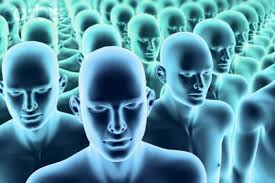
People look at cloning as gods work, and you shouldn't play god. This was most of the responses on a poll that a website took on cloning. I feel this will affect our civilization greatly. It will change how we look at the world knowing that another us could come back. Its a weird thing to think about, another you coming back. It will have a negative impact because most people will look at it as not right. Because if someone loses a family member and then they clone them thinking they might be the same, but then they come back with any genetic disorders. They spent all that money to see that person, and then they get nothing but a failure. There are many benefits with cloning animals because then we wouldn't have world hunger because we would have enough animals to feed everyone with the help of cloning. Also if we clone humans, we could do tests to cure diseases or many more things, the sky's the limit. There are many things that people feel is wrong with cloning. An example is how they feel that it’s God’s job, and how we shouldn’t interfere with his creations. Both sides are right, I’m not for it or against it, I'm in the middle of it. It really doesn't matter to be because I’m not going to clone myself or a family member anytime soon. I also know for a fact my parents aren't going to pay for my dogs to get cloned. Its too expensive.
 Resources:
I'm here to tell you what exactly cloning is, and I hope after this paragraph you understand. There are two types of cloning: An artificial embryo twinning is a relatively low-tech way to make clones. As the name suggests, this technique mimics the natural process that creates identical twins, and theirs Somatic cell nuclear transfer (SCNT), also called nuclear transfer, uses a different approach than artificial embryo twinning, but it produces the same result: an exact genetic copy, or clone, of an individual. In the cloning procedure the nucleus of a fully differentiated donor cell — such as the udder cell used in Dolly’s case — is inserted into an egg cell after removing the egg’s own nucleus. The altered egg cell is stimulated to divide, developing into an embryo made up of cells that genetically match the donor organism that had supplied the nucleus. Therapeutic or reproductive cloning can be done when the cloned embryo is about a week old. Scientists will almost certainly use fewer eggs if therapeutic cloning is used on people. By reading this I hope you understand what cloning is, now I'm going to tell you the benefits of cloning on species, but I's also going to tell you the negative effect of it.
Here is an animation that I found shows how they clone
http://learn.genetics.utah.edu/content/cloning/whatiscloning/
There are more benefits than risks involved in cloning. Cloning could us research cures for diseases. Scientists, and doctors could do the research on a clone, and it could help change mankind. We could find the cure for cancer, and aids by studying it on the clones. We can't research on actual human beings, but the clones are clones. We can make more. We would solve world hunger by cloning animals. We wouldn't have a shortage of meat because we could clone the animals. Also no animal would go extinct because well clone the same exact species. Scientists said if they try thy could clone a dinosaur egg, and we could actually see hoe one looked. On the favorable side with successful animal cloning - particularly cloning from an adult animal - you know exactly how your clone is going to turn out. This becomes especially useful when the whole intention behind cloning is to save a certain endangered species from becoming totally extinct.That this is possible was shown by cloning an Indian Gaur in 2001. The cloned Gaur, Noah, died of complications not related to the cloning procedure. Some of the risks in cloning is if you really wanted to, and if you had enough money, you could clone your beloved family cat. At least one biotechnology company in the United States has offered cat cloning services for the privileged and bereaved. But don't assume that your cloned kitty will be exactly the same as the one you know and love. An individual is a product of more than its genes—the environment plays an important role in shaping personality and many other traits.You wouldn't get the same person or animal that you cloned. They could act different, and even look a little different. Lastly,in a large percentage of cases, the cloning process fails in the course of pregnancy or some sort of birth defects occur, for example, as in a recent case, a calf born with two faces. Sometimes the defects manifest themselves later and kill the clone.I wouldn't want to spend that amount money, and not get the same person or beloved animal. These are some of the benefits and risks involved with cloning.
Here are the questions I asked my friends and Family, and their responses.
Interviewee | Question |
1.Marybeth Chavez | Do you feel cloning will have a positive effect for mankind: Yes, I feel that cloning could help us solve world hunger, and plus I wouldn't want to lose my dog gordo.I would clone Gordo my dog in a second, he's family. |
2.Jeremy Chavez | What risks do you feel will happen if we start to clone more animals and humans: It could have a negative effect, third world countries could make armies, like Isis. I don't feel like having another World War by cloning people. It could help us though by cloning for our army, well be able to defend ourselves. |
3.Michael Chavez | could cloning change the outlook of life knowing that another you could be produced: It wouldn't be me exactly, it would have a different personality, it would only look like me. It would change the outlook, but people don't know the exact outcome of cloning. They wont be them. |
4.Mia Weckel | would you like to be cloned, why or why not: Yes, I would love to be cloned, and I think people would love to have another Mia. LOL The world would be a better place in the end having another Mia. |
5.Max Weckel | What do you think about the idea of cloning: I feel it could be helpful, I could clone my dogs, and never have to say goodbye to them. I love my dogs. But, it can be negative, the clones could come back aggressive, or they could fail in the end. I would want the same dog that I started with. |
Cloning. (n.d.). Retrieved February 18, 2015, from http://www.public.iastate.edu/~rhetoric/105H16/copp/emb/embcopp.htm
Why Clone? (n.d.). Retrieved February 18, 2015, from http://learn.genetics.utah.edu/content/cloning/whyclone/
Is human cloning wrong? (2013, January 1). Retrieved February 18, 2015, from http://www.debate.org/opinions/is-human-cloning-wrong
Animal Cloning: Old MacDonald's Farm Is Not What It Used To Be. (n.d.). Retrieved February 18, 2015, from http://www.manataka.org/page1033.html
Human Cloning Symposium - What is Cloning? (n.d.). Retrieved February 20, 2015, from http://groups.nbp.northwestern.edu/science-outreach/cloning/cloning.html
Alzheimer's
By
Seth M.
Frank M.
Video:
Seth M.
Frank M.
Video:
REFLECTION
If you have watched the video by now (which would probably be a good idea because it has all of our questions and such) you know that Alzheimer's is a disease that can progressively affect your mental memory and many other functions to fail over time. It is commonly in old people and there are a lot of old people. If we were to do something like this for this part of the brain we could probably live longer, regrow lost limbs, accelerated digestion, and fix all of our neuro problems and things like that. If this were to happen today with this corrupt government they would go bankrupt and that would be bad? For them of course because it would be good for the rest of the population. But, at what cost? This could probably take a while to perfect and we will learn to use less and less but, what i mean is that documentary we were watching and how they were using the stem cells in the fetus’s and putting them into something else. Definitely sounds possible especially in this day and age with all of these cool gadgets and doohickies.Even if this were to go into the early stages we would definitely have faults such as brain tumors, Complete Annihilation of the brain, make the patients case even worse than it was before, loss of eyesight and other senses, and to many to list with patterns that would mess up if you were to place the cell in the wrong place at the wrong time.
CITATIONS
http://www.aegisliving.com/ |
Help End Alzheimer's. (n.d.). Retrieved February 18, 2015, from http://www.alz.org/ |
Alzheimer's Disease Fact Sheet. (n.d.). Retrieved February 18, 2015, from http://www.nia.nih.gov/alzheimers/publication/alzheimers-disease-fact-sheet |
What is dementia? (n.d.). Retrieved February 18, 2015, from http://www.alzheimers.org.uk/site/scripts/documents.php?categoryID=200360 |
Cancer
Nathaniel L.
Period 3
Period 3
Cancer is a defect in which bad (or cancerous) cells go into hiding and as a result are not destroyed. Because of the way cancer works, it is very hard to cure, as we have not yet discovered a way to destroy cancer cells without destroying healthy cells. Chemotherapy works by slowing the growth and production of cells in order to stop cancer cells from reproducing. Unfortunately, also stops growth of healthy cells, such as those that line your stomach and mouth, as well as a person’s hair. This is why patients going through chemotherapy go bald.
Chemotherapy currently our only treatment for cancer. Chemotherapy is not a cure for cancer, as it does not always completely eliminate the cancer cells. Even if it does, it is possible for the cancer to return later in another part of the body. Chemotherapy is not an assured treatment and is not always permanent. It is also a very dangerous treatment that takes a long time to complete.
I asked 5 other people for their opinions on different cancer subjects. I asked GiGi, “If you won a 23 million dollar lottery, how much would you donate towards curing cancer?” She generously answered, “All of it.”
The next person I asked was Braden. I questioned him, “If we were to cure cancer, what disease should we invest in curing next?” His answer was, “HIV.” I would agree.
My next interviewee I wanted to talk to was Daniel Dibb. I asked Daniel, “How important do you think curing cancer is?” He answered, “I think it’s really important. A lot of people go through it, it’s really scary for those who go through it and it’s really scary for their families.”
The next person I asked was Sophia. I inquired, “Do you think there is any potential danger in cancer research?” She answered, saying, “With chemotherapy, your immune system is really low, and while you have a low level immune system, that can make you more susceptible to medical issues, such as my grandma, who had heart failures while under chemo."
The last person I asked was Gregory. I asked him, “How close do you think we are to finding the cure for cancer?” He answered, “We could be close, but I feel like the answer is just out of our reach.”
So how can genetic engineering work for cancer? If it were possible to cure cancer by genetically engineering babies that were immune to cancer, then we could have a genetic breakthrough. We may be very close or very far away from such an advancement, but could genetic engineering be the cure to cancer?
According to slate.com, a recent scientific experiment allowed injected T-Cells to successfully attack and destroy a patients tumor with virtually no side affects.
Cancer Treatment
Scott L.
Period 2
Period 2
Stage Of Life: Adulthood
Genetic Engineering Concept: Cancer Treatment
Description of Concept:
Genetic Engineering Concept: Cancer Treatment
Description of Concept:
How is my topic important to Science?
Genetic testing is important to our science world today. It could help people to be relived from uncertainty and allow people to take steps to reduce their cancer risk. In addition, people who have a positive test result may be able to participate in medical research that could, in the long run, help reduce deaths. This is the sole reason of which Genetic Screening/Testing is very important to Science.
How is my topic important to Human Culture?
“Because harmful BRCA1 and BRCA2 gene mutations are relatively rare in the general population, most experts agree that mutation testing of individuals who do not have cancer should be performed only when the person’s family history suggests the possible presence of a harmful mutation in BRCA1 or BRCA2.
In December 2013, the United States Preventive Services Task Force recommended that women who have family members with breast, ovarian, fallopian tube, or peritoneal cancer be evaluated to see if they have a family history that is associated with an increased risk of a harmful mutation in one of these genes” (2)
As said above, the mutation testing method is highly accepted by experts worldwide and could be performed without any serious casualties. CAR Cells of the other hand, is still trying to be proven. It has not been verified by the FDA.
How is my topic important to human culture?
“The cost for BRCA1 and BRCA2 mutation testing usually ranges from several hundred to several thousand dollars. Insurance policies vary with regard to whether or not the cost is covered. People considering BRCA1 and BRCA2 mutation testing may want to find out about their insurance coverage for genetic tests before having the test.
Some of the genetic testing companies that offer testing for BRCA1 and BRCA2 mutations may offer testing at no charge to patients who lack insurance and meet specific financial and medical criteria.” (2)
The process for which the Cancer is cured is by Mapping out a Person’s Genome. The Doctors find out genes that affect or might affect the patient in the future. The Doctor either replaces the Gene with a working affective one or prevents the outbreak of the diagnosis with prescription Drugs, Testing out certain types to see which Drug works well with that unique patient.
The above explains that the cost for Genetic Treatment (most of your description focused on the genetic screening for cancer, not the treatment itself). of Genomics for Cancer ranges from several hundred to several thousand dollars depending on different procedures and Cancers. Some Tests are free for patients who lack insurance and meet special conditions.
Benefits of your genetic engineering concept:
The benefits of using Genetic Treatment to cure and prevent cancer is in the most way valuable and respected. The benefits are endless. By using Genetic Screening, we could prevent almost all of the Cancer types if noticed early enough and also give patients a head start to match up prescription drugs in order to fight Cancer. It could not only save lives but also give life by allowing patients to know and feel relieved having or not having Cancer. This is the most effective and popular was to treat Cancer as of today. It has been proven by the FDA. This method is Safe, Reliable, and Effective. Image a world today with Cancer having the same rank and influence as the Common Flu. It could change million’s of people’s lives. This is why I believe that Genetic Screening could redesign a lot of people’s lives.
Risks involved with your genetic engineering concept:
According to the official website Cancer.gov, the risks are as follows:
“The direct medical risks, or harms, of genetic testing are minimal, but knowledge of test results may have harmful effects on a person’s emotions, social relationships, finances, and medical choices.
People who receive a positive test result may feel anxious, depressed, or angry. They may have difficulty making choices about whether to have preventive surgery or about which surgery to have.
People who receive a negative test result may experience “survivor guilt,” caused by the knowledge that they likely do not have an increased risk of developing a disease that affects one or more loved ones.
Because genetic testing can reveal information about more than one family member, the emotions caused by test results can create tension within families. Test results can also affect personal choices, such as decisions about marriage and childbearing.
Violations of privacy and of the confidentiality of genetic test results are additional potential risks. However, the federal Health Insurance Portability and Accountability Act and various state laws protect the privacy of a person’s genetic information. Moreover, the federal Genetic Information Nondiscrimination Act, along with many state laws, prohibits discrimination based on genetic information in relation to health insurance and employment, although it does not cover life insurance, disability insurance, or long-term care insurance.
Finally, there is a small chance that test results may not be accurate, leading people to make decisions based on incorrect information. Although inaccurate results are unlikely, people with these concerns should bring them up during genetic counseling.” (2)
Interview Questions:
Scott has conducted a research in the field of Cancer. Scott asked 4 Random students from West Tech and 1 Random Teacher about the topic of Cancer on each question. This is how these lovely contributors responded!
Interviewee | Question |
| Do you have any insight to any Cancer related diseases such as White Blood Cell Cancer? No No No Yes Teacher - Yes (Palafox) |
2. Classmates + Teacher | Have you ever had thoughts about having your Genome mapped out in order to find out Cancer Related Genes? No Yes Yes Yes Teacher - Yes (Palafox) |
3. Classmates + Teacher | From your field of expertise, do you believe Cancer to be untreatable as of right now? (Yes = Treatable) Yes Yes Yes Yes Teacher - Yes (Palafox) |
4.Classmates + Teacher | If we could prevent Cancer today by mapping your genes, would you consider it even though it may cost a huge amount? Yes Yes Yes Yes Teacher - Yes (Palafox) |
5. Classmates + Teacher | Do you have any family members that have had experience with Cancer? Yes Yes Yes Yes Teacher = Yes (Palafox) |
As you could see from the results, Cancer appeared to be very common among families. By using Genetic Screening, we would
affect many lives and many families as well. The impact would be humungous and amazing to see. I would love to see all these
families get treatment and cures, especially with the families that had or have experienced family members that have had
experience with Cancer.
Resources:
Resources:
CAR T-Cell Immunotherapy. (2014, October 16). Retrieved February 12, 2015, from http://www.cancer.gov/ |
BRCA1 & BRCA2: Cancer Risk & Genetic Testing. (2014, January 22). Retrieved February 18, 2015, from http://www.cancer.gov/ |
Gene Therapy. (n.d.). Retrieved February 19, 2015, from http://www.mdanderson.org/ |
Cancer Treatment Gets Personal. (n.d.). Retrieved February 19, 2015, from http://harvardmagazine.com/ |
Reflection:
I believe my topic to be moral, as almost all experts believe that this method of treatment (Genetic Screening/Genotype) has no Harmful after effects. This method; which I also believe to be moral because of how it does not interrupt our privacy except having a record of our whole DNA mapped out. This, Of course would lead and create problems that we have never seen before. This Cancer treatment type may affect my life because a certain type of Cancer runs in my family although it is not common. I believe that humans should consider re-designing life as it would prevent or even cure life threatening disasters or events at a low cost, both humanely and economically. These types of technologies that would let us re-design life would help the human race but has to have a certain moral and limit to where you may not genetically modify anything except when you are helping or alleviating a person to be more “normal”.
I believe my topic to be moral, as almost all experts believe that this method of treatment (Genetic Screening/Genotype) has no Harmful after effects. This method; which I also believe to be moral because of how it does not interrupt our privacy except having a record of our whole DNA mapped out. This, Of course would lead and create problems that we have never seen before. This Cancer treatment type may affect my life because a certain type of Cancer runs in my family although it is not common. I believe that humans should consider re-designing life as it would prevent or even cure life threatening disasters or events at a low cost, both humanely and economically. These types of technologies that would let us re-design life would help the human race but has to have a certain moral and limit to where you may not genetically modify anything except when you are helping or alleviating a person to be more “normal”.
Vaccination for Children?
Jacob G.
Period 5
Do you think that giving children a vaccine shot is a good idea? Well you would say yes right away right. It is more complicated than this because there are many different things that go into deciding what vaccines to give for certain children. My friend Chase Spencer and I were able to research this topic and we were able to find out the different ways that children are able to get vaccinated. This research topic was very interesting because there are many different articles that debate whether these vaccines are good or bad for children.
Period 5
Vaccination for Children?
Do you think that giving children a vaccine shot is a good idea? Well you would say yes right away right. It is more complicated than this because there are many different things that go into deciding what vaccines to give for certain children. My friend Chase Spencer and I were able to research this topic and we were able to find out the different ways that children are able to get vaccinated. This research topic was very interesting because there are many different articles that debate whether these vaccines are good or bad for children.
Subscribe to:
Posts (Atom)